Can foreigners go to any hospital in China?
Yes, technically. Any public hospital in China must treat any person in need of emergency care. There is no requirement to be a Chinese citizen or resident.
In practice, the experience varies dramatically. Public hospitals in China are high-volume institutions. Registration, payment, doctor consultations, tests, and pharmacy visits happen in different locations within a large complex, and nearly all signage and communication is in Chinese. The system is designed for efficiency at scale, not for guiding a non-Chinese speaker through the process.
For non-emergency care, foreigners should use either:
- International hospitals — private facilities designed for expatriates and foreign visitors
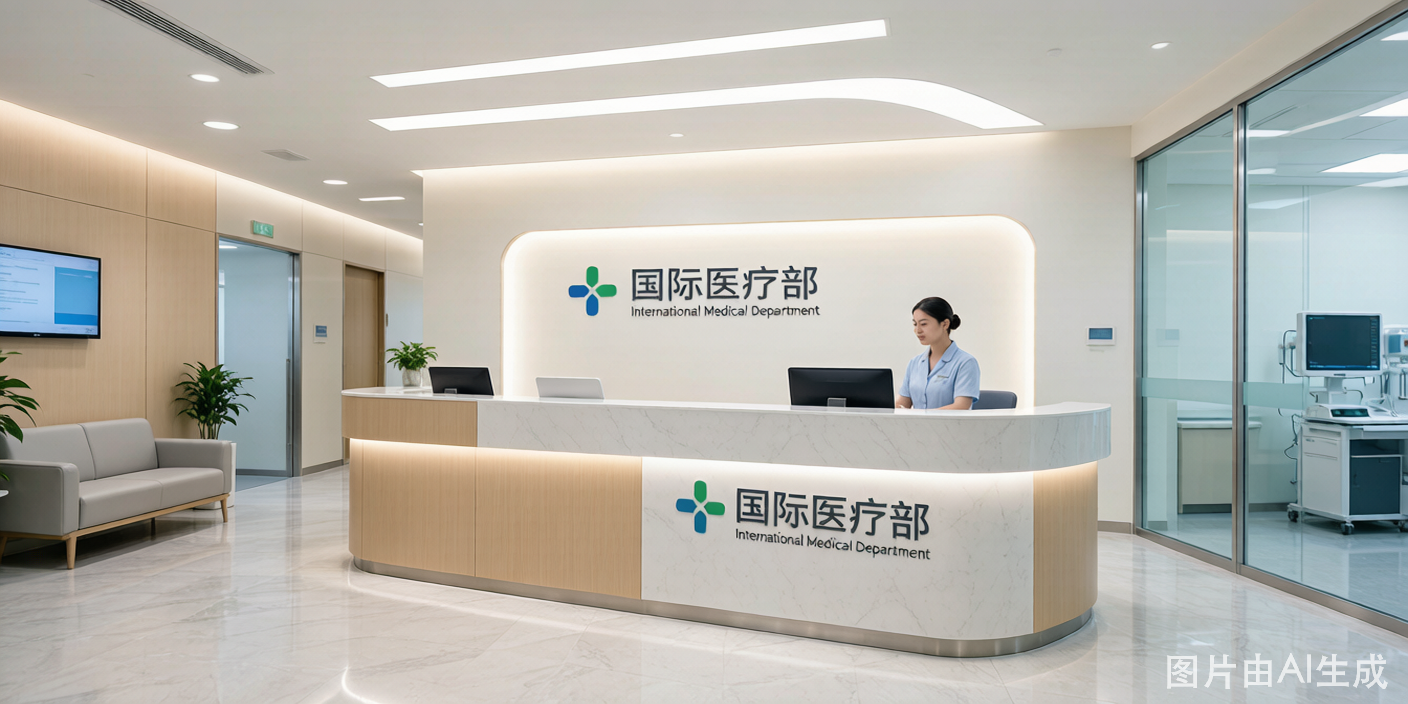
- International/VIP departments of public hospitals — separate wings with English-speaking staff, streamlined processes, and shorter wait times
Recommended Hospitals by City
Beijing
| Hospital | Type | Notes |
|---|---|---|
| Beijing United Family Hospital (和睦家) | Private international | Full English service, accepts most international insurance, expensive but the gold standard for foreigner care. 24-hour emergency department. |
| Peking Union Medical College Hospital (协和医院) — International Medical Service | Public VIP wing | Top-tier Chinese hospital with an international department. English-speaking staff. Less expensive than United Family. |
| Beijing Friendship Hospital (友谊医院) — International Medical Center | Public VIP wing | Good English support. Well-regarded for gastroenterology and tropical medicine. |
| Raffles Medical Beijing | Private international | Singapore-based international clinic. Family medicine, health screenings, and specialist referrals. |
Shanghai
| Hospital | Type | Notes |
|---|---|---|
| Shanghai United Family Hospital (和睦家) | Private international | Same standard as Beijing location. 24-hour emergency department. Located in Changning District. |
| Jiahui International Hospital (嘉会) | Private international | Modern facility in Xuhui District. Full English service, strong in oncology and cardiology. |
| Huashan Hospital (华山医院) — Worldwide Medical Center | Public VIP wing | Renowned for neurology and dermatology. International center with English service. |
| Ruijin Hospital (瑞金医院) — International Medical Center | Public VIP wing | One of Shanghai's best public hospitals. International wing accepts foreign insurance. |
| Shanghai East International Medical Center | Public VIP wing | Located in Pudong. Convenient for business travelers. |
Guangzhou
| Hospital | Type | Notes |
|---|---|---|
| Guangzhou United Family Hospital (和睦家) | Private international | Full English service in Tianhe District. |
| Clifford Hospital (祈福医院) | Private/JCI accredited | Panyu District. JCI-accredited, English-speaking staff. |
| Guangdong Provincial People's Hospital — International Medical Center | Public VIP wing | Strong in cardiology. English-speaking coordinators available. |
Shenzhen
| Hospital | Type | Notes |
|---|---|---|
| Shenzhen United Family Hospital (和睦家) | Private international | Futian District. Smaller than Beijing/Shanghai locations but same standard. |
| HKU-Shenzhen Hospital (香港大学深圳医院) — International Medical Center | Public VIP wing | University of Hong Kong-affiliated. English service, strong in multiple specialties. |
Chengdu
| Hospital | Type | Notes |
|---|---|---|
| Chengdu United Family Hospital (和睦家) | Private international | Full English service. |
| West China Hospital (华西医院) — International Medical Center | Public VIP wing | One of China's top-ranked hospitals. The international center provides English coordination. |
What to Expect at a Chinese Hospital
Public hospital (standard department):
- Go to the registration counter (挂号处 / guàhàochù). Show your passport. State which department you need (internal medicine, orthopedics, dermatology, etc.). You receive a registration card with a queue number.
- Wait for your number to appear on the screen outside the doctor's office. Wait times can be 1-3 hours.
- The consultation is brief (5-10 minutes). Doctors see 50-100+ patients per day.
- If tests are ordered, go to the test center (often a different floor or building), pay, get the test, wait for results (hours to next day), then return to the doctor.
- If medicine is prescribed, go to the pharmacy (different counter), pay, and collect.
The entire process may take 3-6 hours and requires navigating a Chinese-language system. Staff may not speak English. Payment is required upfront at each step.
International hospital or VIP department:
- Call ahead or walk in. The registration process is similar to a Western hospital — a coordinator greets you, takes your information, and guides you through each step.
- Wait times are shorter (typically 15-30 minutes).
- Consultation with an English-speaking doctor who spends 15-30 minutes with you.
- Tests and pharmacy are coordinated for you — the coordinator handles the logistics.
- Insurance direct billing is available at international hospitals. VIP departments may require upfront payment with reimbursement from your insurer.
Cost Comparison
| Service | Public Hospital | Public VIP Wing | Private International |
|---|---|---|---|
| GP consultation | 20-50 RMB | 300-800 RMB | 800-1,500 RMB |
| Specialist consultation | 50-100 RMB | 500-1,200 RMB | 1,200-2,500 RMB |
| Blood test (basic) | 50-150 RMB | 200-500 RMB | 500-1,000 RMB |
| X-ray | 100-200 RMB | 300-800 RMB | 800-2,000 RMB |
| Emergency room visit | 100-300 RMB | 800-1,500 RMB | 1,500-3,000 RMB |
Pharmacies and Over-the-Counter Medicine
Pharmacies (药店 / yàodiàn) are plentiful — look for the green cross sign. Over-the-counter medications for colds, headaches, allergies, and digestive issues are available without prescription. Prescription medications require a Chinese doctor's prescription — you cannot use a foreign prescription.
Pharmacists may not speak English. To get the right medication:
- Show them a photo of the medication packaging (if you know what you need)
- Write down the generic drug name (e.g., "ibuprofen," "loratadine")
- Use a translation app to describe your symptoms
Emergency Medical Care
For emergencies, dial 120 for an ambulance. In a life-threatening situation, you can also go directly to the nearest hospital emergency room (急诊 / jízhěn).
Ambulance response times in major cities are typically 10-20 minutes. The ambulance will transport you to the nearest hospital with an emergency department — you do not choose the destination. Emergency room treatment is provided first; payment is handled afterward.
If you are conscious and the situation is not immediately life-threatening, and you have the option, going directly to an international hospital emergency department will result in a more familiar standard of care and communication.